





 Back to Search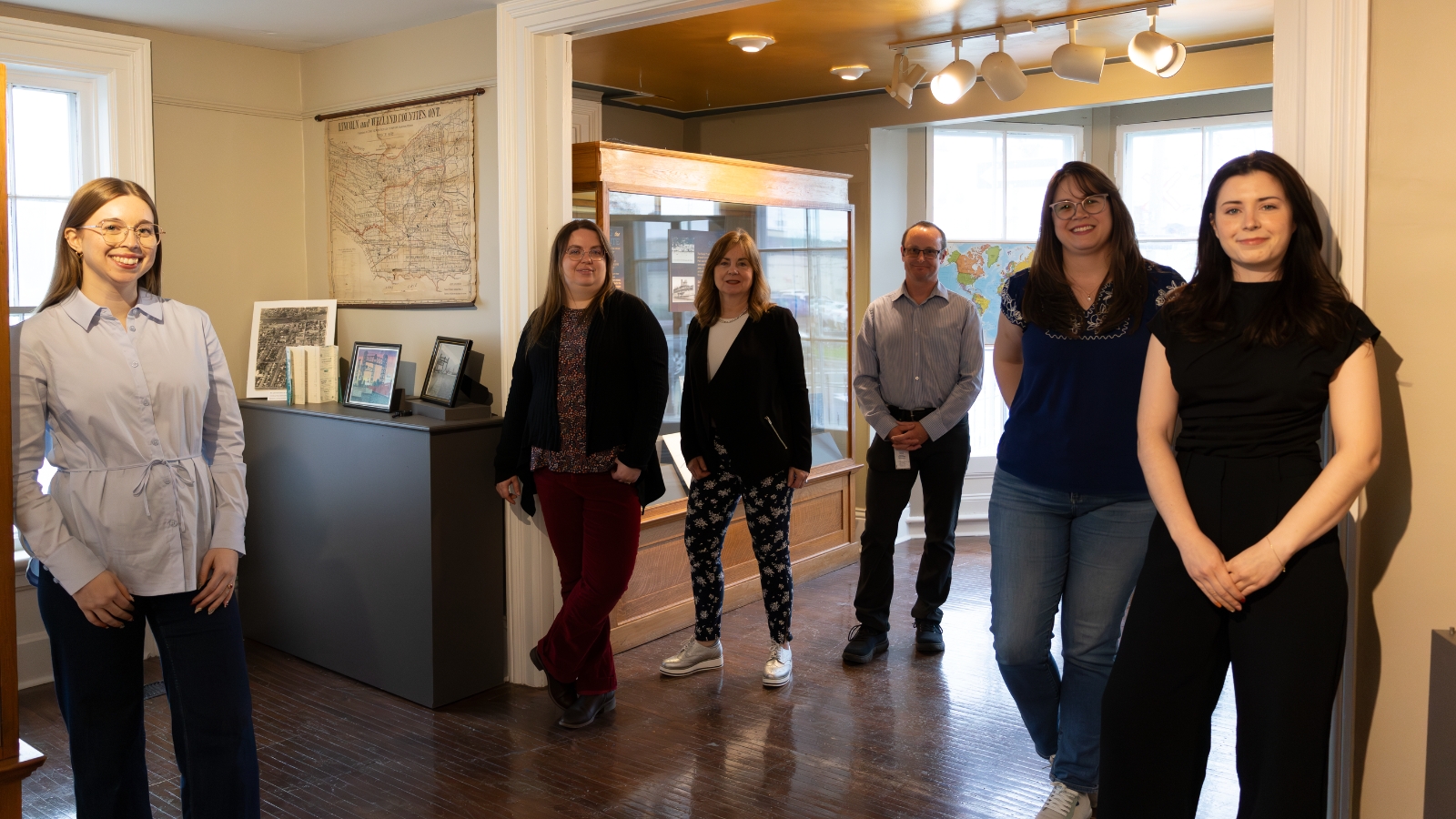
Long before an artifact is displayed at the Port Colborne Historical & Marine Museum, it undergoes months – even years – of careful research, preservation and planning.
That behind-the-scenes work is now on full display as the Museum welcomes visitors for its 2026 season, which began May 1 – highlighting not only a new exhibit, but a continued commitment to making local history more accessible and engaging for the Port Colborne community.
For Assistant Curator Tami Nail, that work begins long before opening day.
Exhibit development is guided by a three-year plan, allowing the Heritage and Culture Department to thoughtfully shape each display. The process includes everything from researching materials and selecting artifacts to designing engaging layouts and incorporating interactive elements.
“Coming up with themes and topics is a team effort,” explains Nail. “We also take ideas from the community – drawing inspiration from trends, interests, and community anniversaries and celebrations. Sometimes we even base our themes on new donated items that come in that we think will lend themselves to an engaging exhibit.”
This year’s exhibit, “Putting Port Colborne on the Map,” explores the City of Port Colborne’s evolution and growth through maps, photographs, and artifacts dating from the late 1700s to the present day.
“The idea came from increasing trends of people taking more staycations and exploring closer to home,” says Nail. “This exhibit explores how Port Colborne is far more than just a point on a map of the Niagara Region – it’s a community shaped by our waterways, industry, and generations of stories. We really hope visitors discover the many ways our city has been put on the map.”
While the stories on display span centuries, the work behind them is grounded in careful, modern museum practices. Each artifact is handled using specialized preservation techniques, including attention to environmental factors such as humidity, temperature, and light exposure.
“Preventative conservation is a big part of collection care,” says Nail. “We do everything we can to make sure the artifact stays in good condition.”
That same level of care extends to how exhibits are experienced by visitors – ensuring history is both protected and accessible, while remaining engaging for all.
Accessibility is a central focus across Museum grounds, with recent upgrades at both the Museum and Roselawn Centre including accessible washrooms, updated entrances, improved lighting, as well as a new ramp at Roselawn. The changes help remove physical barriers while creating a more welcoming environment for visitors to navigate, ensuring more people can experience and connect with Port Colborne’s history firsthand.
“This allows us to be a full community space, where everyone feels comfortable and can enjoy the culture and heritage of Port Colborne,” says Nail.
Accessibility is also built directly into the exhibit design process. From colour schemes and lighting to display case layouts, each detail is carefully considered to improve visibility, readability, and overall visitor experience – while maintaining the integrity of the artifacts.
Nail says the Museum’s role is not only to preserve artifacts, but to help build connections between the community and local history.
“I always tell people we are the protectors of the community’s collection, not the jail keepers of it,” says Nail.
“Our spaces at the Museum grounds and Roselawn are not full of old dusty things and hushed quiet – we are full of colour, wonder, celebrations, learning, conversations and laughter. We are all about people engaging with the spaces, history and culture in different ways.”
As Museum Month is recognized throughout May, including International Museum Day on May 18, the Port Colborne Historical & Marine Museum continues to highlight the important role museums play in preserving and sharing stories that shape a community. For Nail, the museum experience is about helping visitors see local history in a more personal and meaningful way – where stories, artifacts and community come together.
“I always hope people find or feel connection,” she says, “whether it is to people, an artifact in the collection, or the community.”
The Port Colborne Historical & Marine Museum is open from May 1 through December 20, with exhibits, programming and events taking place throughout the year.
Learn more by visiting www.portcolborne.ca/museum
 Subscribe